

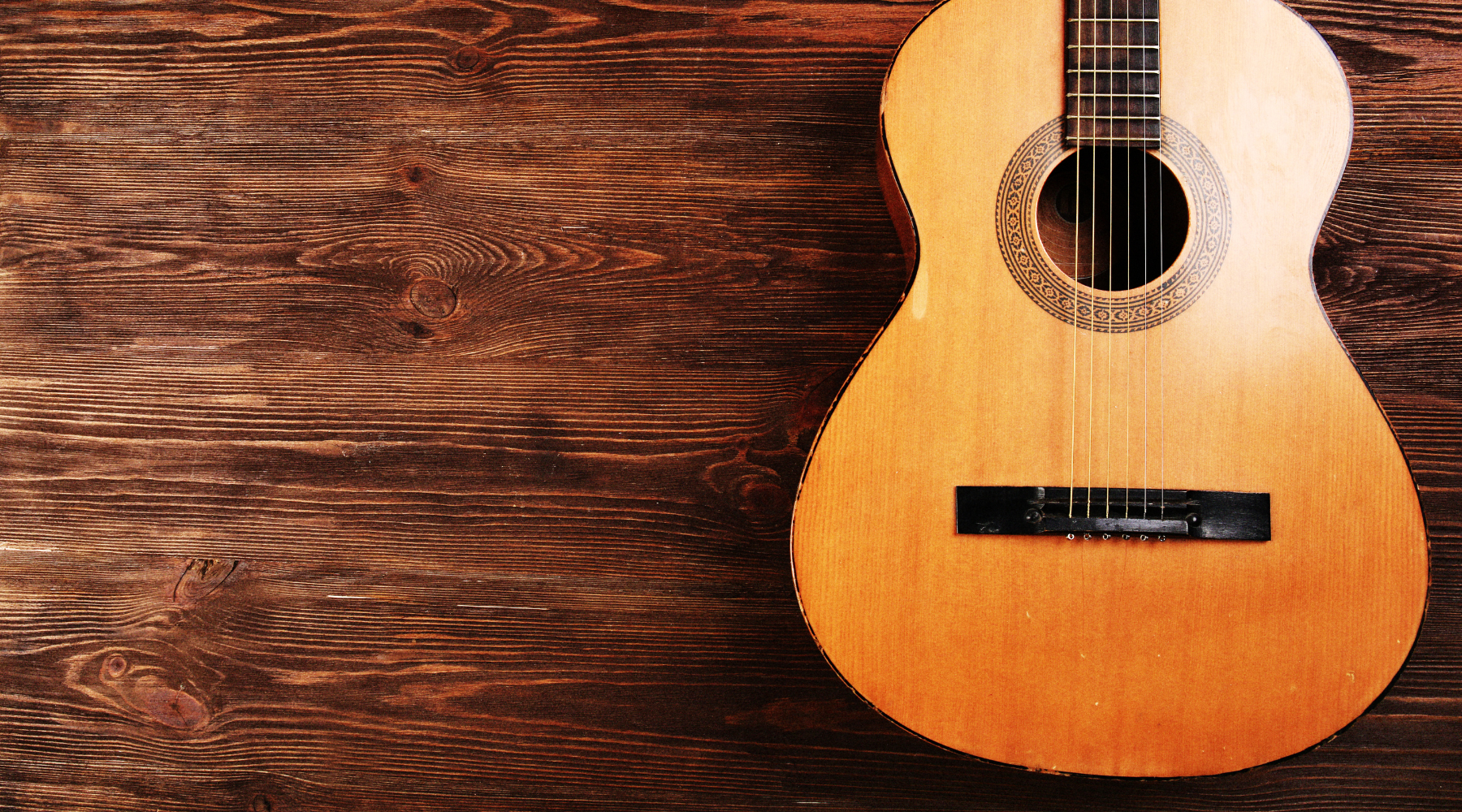
In this video, virtuoso fingerstyle guitarist Kinloch Nelson plays his Takamine 132S nylon string classical guitar converted to steel strings with the TurboTail.
Please give a close listen and let us know what you think.
One of our viewers recommended that we ask Kinloch Nelson to try the TurboTail. This is because Kinloch may be the only well recognized guitarist to have discovered the merits of lightly braced nylon string guitars converted to steel strings. In fact, Kinloch's "go to" guitar for decades has been the Takamine 132S, a fan braced classical guitar which he converted to steel strings.
Kinloch's Steel String Guitar Conversions
Kinloch is not only a skilled player, composer and teacher, but he is also a creative innovator of acoustic guitars. Over the years, Kinloch has experimented with adding extra fan bracing and installing extra light strings to try to prolong the life of his classical guitar conversions to steel strings.
Ultimately, he has had to accept the limitations of classical guitars for his music. In short, the bridge of these lightly fan braced nylon string guitars eventually rotate due to steel string tension on a guitar not designed for steel strings. The saddle has to be shaved, and the string break angle over the saddle becomes very low which hurts attack and volume.
How TurboTail Benefits Steel String Conversions
The TurboTail would protect the lightly braced soundboard of Kinloch's favorite guitars, while allowing his playing to project better. What's more, he would be able to use heavier, standard gauged steel strings, achieving greater volume since the TurboTail transfers string tension from the bridge and soundboard to the tail block.
The Big Guitar Building Compromise
Acoustic guitar design is always a compromise.
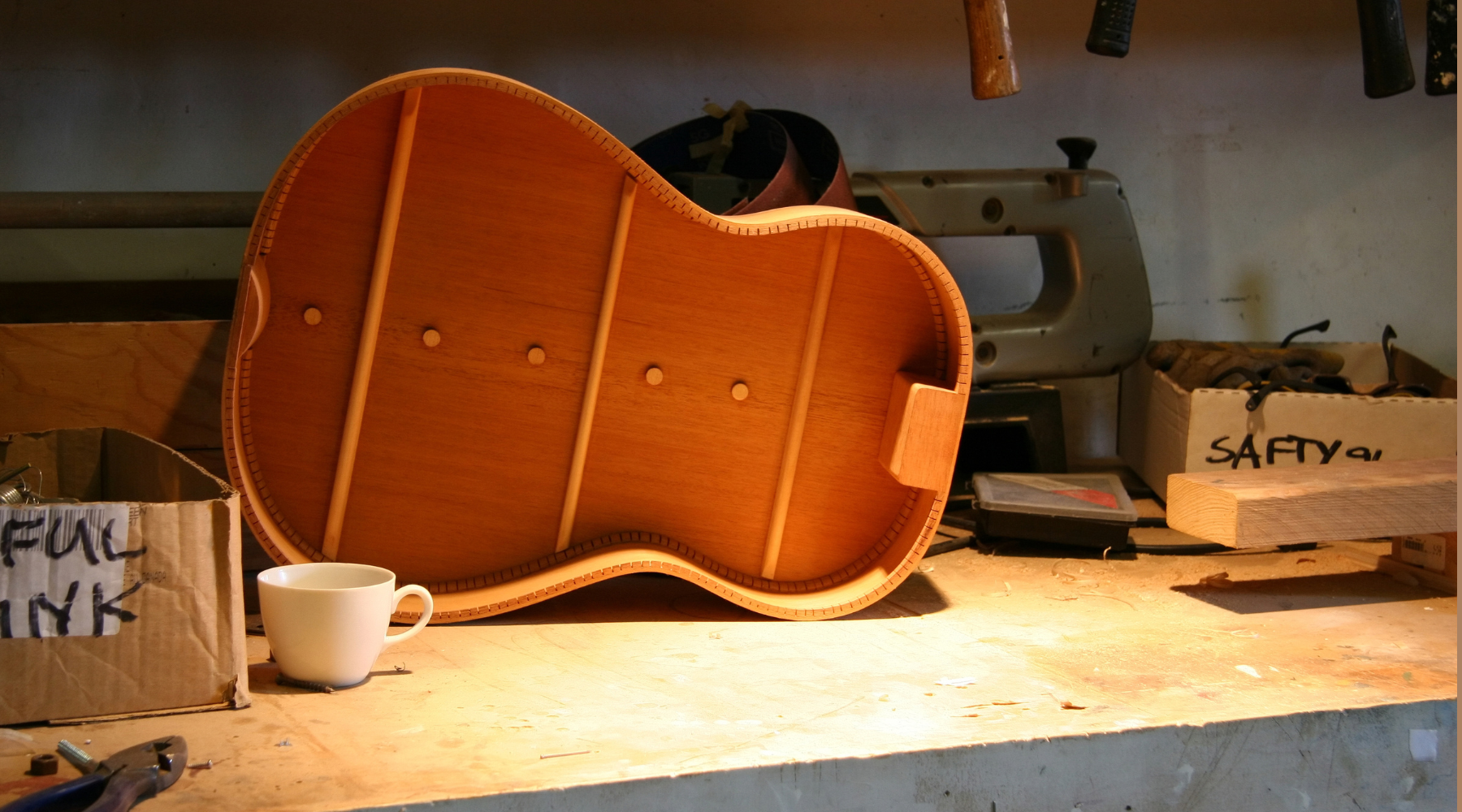
One can build a guitar with a super lightly braced soundboard, recognizing that at some time in the near or not too near future the soundboard is likely to warp, crack, or implode due to the tension and rotational forces imposed by high tension steel strings.
On the other hand, one can follow the safe, traditional route of over building the soundboard and braces to avoid such problems. The consequences of this traditional choice are that the guitar sounds relatively quiet and subdued with a noticeable lack of bass response. This is the typical path chosen by all manufacturers and even custom guitar builders. In sum, they chose to make structural considerations come before tonal objectives because they design guitars so that played strings rely upon the soundboard to maintain tension.
The TurboTail Eliminates the Compromise
The TurboTail eliminates the need to play it safe, by transferring the string tension from the bridge to the tail block.
Tell Us What You Think
Again, please give a close listen and let us know what you think. At the very least, I am sure that we can all agree that Kinloch Nelson's playing is sublime. I feel so fortunate that I was introduced to his music (Thank you Grant!)

Share:
What Happens When an Acoustic Guitar Soundboard Is Free to Vibrate? - The Turbo-D